SGLang Sidecar
Experimental. The sidecars and their deployment examples are experimental. Manifests, flags, and behavior may change without notice.
dynamo-sglang-sidecar connects a Dynamo worker to SGLang’s native gRPC
server. See Sidecar Backends
for the architecture.
For the best and latest support, use the upstream SGLang nightly image,
which carries the latest gRPC server updates: lmsysorg/sglang:dev.
Support Matrix
Launch Locally
See lib/sidecar/sglang/launch/
for all topologies. For example, aggregated serving on one GPU:
In a second terminal:
Deploy on Kubernetes
See lib/sidecar/sglang/deploy/
for all manifests. For example, aggregated serving:
Before applying, replace <your-registry>/dynamo-sidecar in the manifest with a
sidecar image and create the hf-token-secret
Secret that the manifest reads.
Topologies
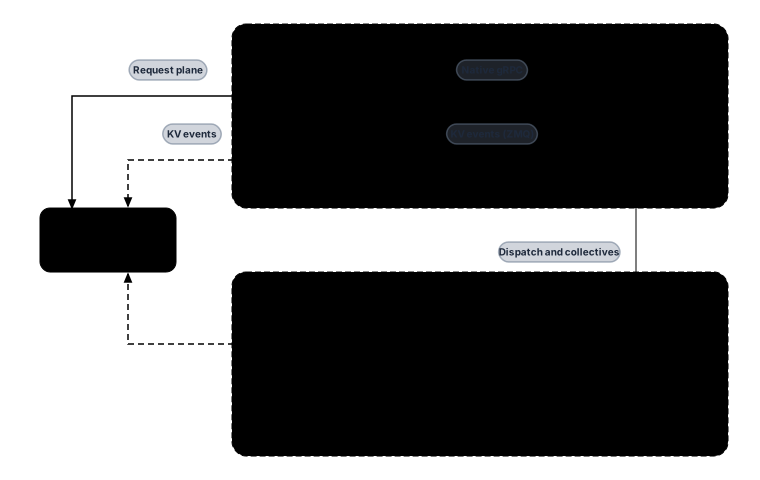
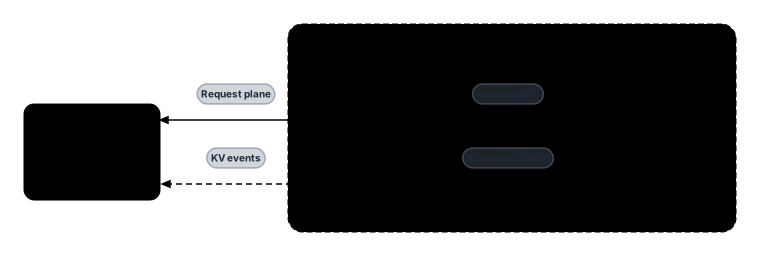
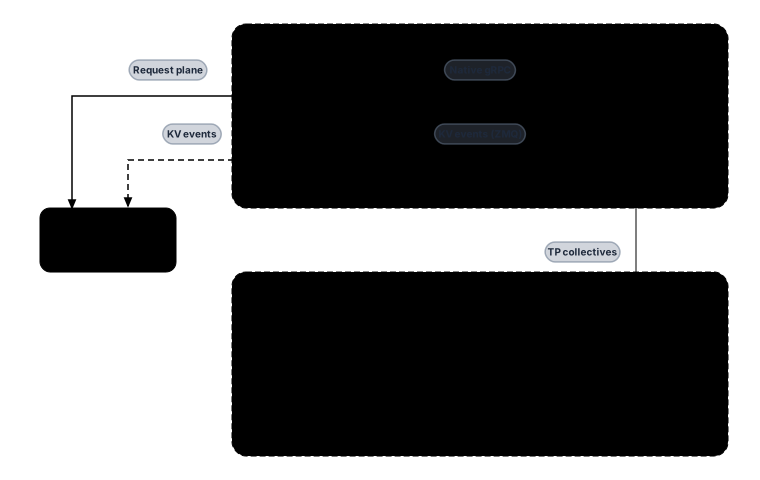
The frontend reaches each sidecar over Dynamo’s request, discovery, and event planes; the sidecar reaches the engine over its native gRPC API. Dashed arrows carry KV events.
Single-Node TP
One engine on one node, with one sidecar.
Multi-Node TP
One engine spans two nodes. Only the leader node has a sidecar; the follower node holds the remaining TP ranks.
Multi-Node DP
The leader sidecar registers every DP rank and serves all requests; SGLang dispatches each one to the right scheduler. The follower sidecar accepts no requests and relays its node’s KV events directly to the frontend.